Fushimi Inari Shrine Guide: How to Visit, Best Time, and What Most Travelers Miss
Fushimi Inari Shrine in Kyoto is one of Japan’s most iconic spiritual landmarks, famous for its thousands of vermilion torii gates climbing the wooded slopes of Mount Inari. It is more than a photo spot. It is the head shrine of Inari worship in Japan, a place where pilgrims, locals, and travelers all move through the same red tunnels with very different intentions, yet somehow leave with the same quiet feeling that they have stepped into something older and deeper than ordinary sightseeing.
Search Intent
This guide is for travelers asking whether Fushimi Inari Shrine is worth visiting, how long to spend there, when to go for fewer crowds, how difficult the hike is, what the torii gates actually mean, and how to combine the shrine with other Kyoto stops in a realistic half-day or full-day plan.
Quick Summary
- Fushimi Inari Shrine is Kyoto’s most famous torii-gate shrine and one of Japan’s best-known Shinto sites.
- The shrine grounds are free to visit, and the mountain path can be explored in short or long segments depending on your energy.
- Early morning is the best time for thinner crowds, softer light, and a more spiritual atmosphere.
- JR Inari Station is directly in front of the shrine, making access unusually easy for Kyoto visitors.
- Fushimi Inari works best when treated as a real sacred place, not just a quick Instagram stop.
Why Fushimi Inari Shrine Still Feels Different From Other Kyoto Sights
Kyoto has no shortage of famous temples, gardens, and shrines, so the obvious question is why Fushimi Inari Shrine still stands out even in a city full of icons. The answer is partly visual and partly emotional. Yes, the endless vermilion tunnels are unforgettable. But what makes the place linger in memory is the way the shrine changes as you move through it. At the entrance, it feels ceremonial and grand. Deeper along the mountain, it becomes quieter, stranger, more personal, and more reflective.
Many first-time travelers assume this is a short stop where you take a few photos under the gates and move on. That is the biggest mistake people make. Fushimi Inari is not one scene. It is a layered experience. The lower area is energetic and crowded, the middle sections begin to breathe, and the upper trails feel like a slow conversation between the forest, the mountain, and the long history of prayer attached to the site.
I think that is why it keeps working even for travelers who normally avoid overly popular attractions. If you give it the right time of day and walk just a little farther than the average visitor, it stops feeling like a famous landmark and starts feeling like a place with an inner life.
What It Feels Like to Walk Fushimi Inari
The first impression is color. The gates are brighter in person than many travelers expect, and the repetition of orange-red frames against the green mountain creates a rhythm that is almost hypnotic. Then the sound starts to matter. The entrance area carries conversation, footsteps, and camera shutters. But once you climb farther, the noise thins out and the place begins to sound like a wooded trail again.
One of the things I like most about Fushimi Inari is that it rewards patience more than speed. If you rush, you mostly remember the crowd. If you slow down, you notice fox statues holding symbolic objects, smaller altars tucked off the path, weathered stone markers, and tiny moments of stillness between groups of visitors. The shrine feels different every ten minutes because the mountain keeps changing the mood.
I also think people underestimate the physical side of the visit. It is not extreme hiking, but it is not a flat stroll either. After a while your legs notice the incline, especially in humid weather. That small physical effort adds something important. The experience feels earned, and that matches the spiritual atmosphere better than a quick walk-through ever could.
History, Meaning, and Why the Torii Matter
Fushimi Inari Taisha traces its origins to 711 and is the head shrine dedicated to Inari, a deity long associated with rice, harvests, prosperity, and later business success. That history matters because it explains why the shrine feels active rather than frozen in the past. This is not a relic that people merely admire. It is a living place of devotion with continued spiritual relevance. Businesses, families, and individuals still come here to pray for success, safety, gratitude, and renewal.
The famous torii gates are not random decoration. Many were donated by individuals or companies as offerings of thanks or hope. That changes how you read the path. Instead of seeing only one giant tourist attraction, you begin to understand it as a long chain of personal intentions. Each gate represents a wish, a success, a promise, or a prayer made visible in wood and paint.
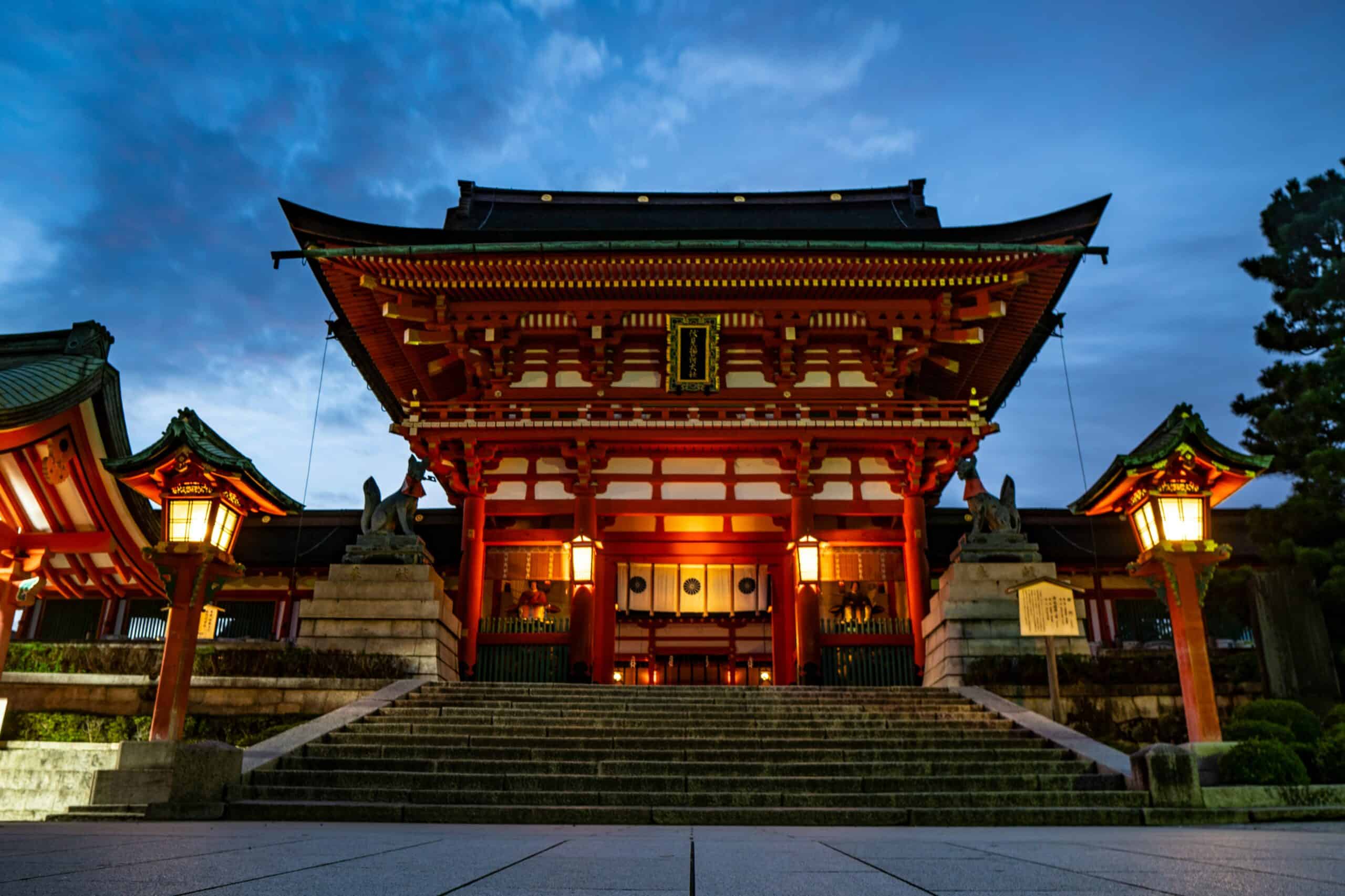
The fox statues, or kitsune, deepen that symbolic layer. They are messengers of Inari and often hold keys, scrolls, or grains in their mouths. On my first serious visit, I expected the gates to dominate everything. Instead, what stayed with me just as much was the quiet presence of these fox figures tucked through the grounds. They make the whole mountain feel watched over in a way that is mysterious rather than theatrical.
Key Visitor Information
| Official Name | Fushimi Inari Taisha |
|---|---|
| Location | 68 Fukakusa Yabunouchi-cho, Fushimi-ku, Kyoto 612-0882, Japan |
| Admission | Free |
| Best Visiting Time | Early morning for fewer crowds and softer light |
| Nearest JR Station | JR Inari Station, directly in front of the shrine |
| Nearest Keihan Station | Fushimi-Inari Station, about a 5-minute walk |
| Best For | Shrine visits, cultural walking, photography, short hikes, spiritual atmosphere |
| Official Website | https://inari.jp/en/ |
Immersive Cultural Experience
Fushimi Inari Shrine is one of the easiest places in Kyoto to feel the difference between looking at Japanese culture and stepping inside it. Visitors can purchase omamori, write wishes on ema plaques, observe prayer rituals, and watch how local worshippers move through the precincts with a seriousness that gently resets the tone for everyone else.
If you are respectful and unhurried, the shrine teaches you something without directly explaining it. You start to understand that Japanese sacred spaces are not always loud about meaning. They reveal it through repetition, symbols, motion, and atmosphere.
Main Highlights You Should Not Rush Past
1. Romon Gate and Main Shrine Area
The lower precincts give you the grand, ceremonial introduction. Even if the crowd is thicker here, do not sprint through it. The entrance architecture sets the tone and makes the climb feel like a passage rather than a walk.
2. Senbon Torii
This is the image most travelers come for, and it does deliver. But the trick is to keep going beyond the first photogenic stretch. The deeper sections often feel more atmospheric and less performative.
3. Mid-Mountain Rest Points and City Views
As you climb, the shrine opens into pockets of perspective where Kyoto begins to appear below. These moments break up the tunnel-like intensity of the torii and remind you that the shrine is inseparable from the mountain.
4. Fox Statues and Small Altars
The small details are part of what gives Fushimi Inari its emotional depth. Watch for stone foxes, miniature shrines, lanterns, and tucked-away devotional spaces that many hurried visitors barely notice.
Festivals and Seasonal Atmosphere
Fushimi Inari Taisha holds seasonal rites and festivals throughout the year, which is another reminder that this is a living shrine rather than a static monument. That said, many travelers do not need to time their entire Kyoto trip around a festival date to enjoy the site. The mountain itself changes mood beautifully with the seasons.
Spring adds fresh color and softer temperatures. Summer can be lush but humid, and the hike feels more demanding. Autumn adds rich foliage to the mountain surroundings, which pairs beautifully with the torii. Winter often gives the shrine a cleaner, quieter mood, especially on cold mornings when visitor numbers are lower.
Personally, I think the best “season” for Fushimi Inari is not just a month but a time of day: very early morning. Even a world-famous shrine becomes intimate when the souvenir stalls are barely awake and the mountain path feels like it belongs to the birds, the stone foxes, and a handful of quiet walkers.
Travel Tips That Actually Make the Visit Better
How to Visit Fushimi Inari Shrine Step by Step
- Take the JR Nara Line from Kyoto Station to JR Inari Station if you want the easiest arrival.
- Alternatively, use the Keihan Main Line to Fushimi-Inari Station if it fits your Kyoto route better.
- Spend a little time in the main shrine precincts before rushing into the torii path.
- Walk beyond the first iconic gate section so the visit becomes more than a photo stop.
- Decide in advance whether you want a short lower-area visit, a mid-level climb, or the full mountain circuit.
- Finish with tea, snacks, or a nearby temple or sake-district stop rather than treating the visit as an isolated sprint.
Nearby Attractions and Local Pairings
- Fushimi Sake District – A great follow-up if you want a softer cultural contrast after the shrine’s mountain energy.
- Tofuku-ji Temple – One of the best nearby pairings, especially in autumn.
- Southern Kyoto Wandering – This area rewards half-day pacing. Do not overpack the schedule if you want Fushimi Inari to actually land emotionally.
Fushimi Inari Shrine vs a Typical Kyoto Shrine Visit
| Category | Fushimi Inari Shrine | Typical Kyoto Shrine |
|---|---|---|
| Visual Identity | Thousands of vermilion torii on a mountain trail | Main hall, courtyard, and garden-centered layout |
| Physical Experience | Walking and climbing are part of the identity | Often easier and shorter to explore |
| Atmosphere Shift | Changes dramatically from lower to upper mountain | Usually more consistent throughout the site |
| Crowd Strategy | Timing matters a lot | Timing still matters, but less dramatically |
| Best For | Travelers wanting both iconic visuals and a real walking journey | Travelers wanting a shorter architectural or spiritual stop |
Who Should Visit Fushimi Inari Shrine
- First-time Kyoto visitors who want at least one major spiritual landmark.
- Photographers looking for one of Japan’s most recognizable visual experiences.
- Travelers who enjoy walking and do not mind stairs and gradual uphill sections.
- People interested in Shinto symbolism, fox imagery, and living shrine culture.
- Visitors willing to wake up early for a dramatically better experience.
FAQ
Is Fushimi Inari Shrine free to visit?
Yes. Visiting the shrine grounds and walking the mountain route does not require an admission ticket.
How long should I spend at Fushimi Inari Shrine?
A quick lower-area visit can take under an hour, but a more satisfying visit usually takes 2 to 3 hours if you want to walk deeper into the mountain.
What is the best time to visit Fushimi Inari Shrine?
Early morning is the best overall choice for fewer crowds, cooler temperatures, and a more contemplative mood.
Can I visit Fushimi Inari Shrine from Kyoto Station easily?
Yes. JR Inari Station is directly in front of the shrine and is one of the simplest shrine-access routes in Kyoto.
Do I need to hike all the way to the top?
No. Many visitors enjoy the lower and mid-level sections only. The shrine still feels rewarding without a full summit loop.
Why are there so many torii gates at Fushimi Inari?
Many gates were donated as offerings of gratitude or prayer by individuals and businesses connected to Inari worship.
Is Fushimi Inari Shrine crowded?
Yes, especially later in the day and around the lower gate areas. Going early makes a major difference.
Is Fushimi Inari worth visiting if I have limited time in Kyoto?
Yes. It is one of Kyoto’s strongest high-impact sights, especially if you can arrive early and avoid the worst crowd window.
More Japan Travel Guides on Trip Nexus
Official and Authoritative Resources
Google Map
Final Verdict
Fushimi Inari Shrine is one of those rare places that fully deserves its global reputation. The visuals are instantly recognizable, but the deeper reward comes from walking farther, slowing down, and allowing the mountain to shift the pace of your visit.
If you want a Kyoto experience that blends photography, movement, symbolism, spirituality, and a real sense of place, Fushimi Inari is still one of the strongest choices in the city. Go early, walk farther than the average visitor, and let the shrine become more than a checklist stop.