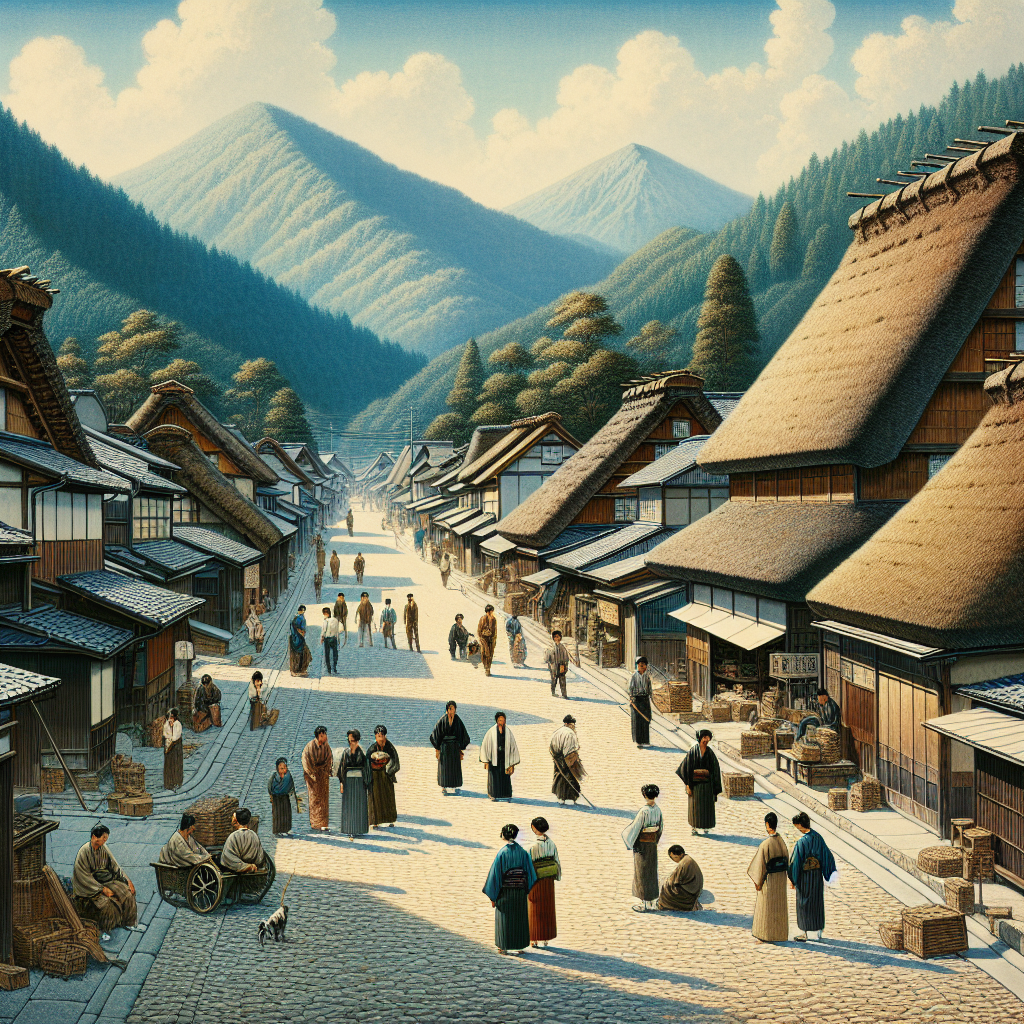
Nestled in the mountains of Fukushima Prefecture, Ouchi-juku Post Town stands as a living testament to Japan’s enduring history, transporting visitors back to the Edo period with its exquisitely preserved thatched-roof buildings and cobblestone streets. This captivating destination, once a crucial stop along the Aizu-Nishi Kaido trade route, now draws travelers from across the globe seeking to immerse themselves in the timeless spirit of rural Japan. The moment you set foot in Ouchi-juku, the modern world recedes, replaced by the tranquil cadence of a bygone era—a place where the past is not just remembered, but vibrantly lived.
Why Visit Ouchi-juku Post Town
Ouchi-juku Post Town is more than a historic relic; it is a rare portal to an authentic Japanese experience largely untouched by the march of time. Here, the air is rich with the scent of wood smoke, and every view is framed by undulating mountains that cradle the village in an emerald embrace. Visitors are enchanted by the harmonious rows of thatched-roof merchant houses, now home to traditional inns, tea shops, and craft stores. The immersive atmosphere, paired with the town’s storied past, makes it an essential destination for anyone longing to walk the same roads as samurai, merchants, and travelers of centuries past. Ouchi-juku is not just a place to see, but a world to feel—a sanctuary where heritage and hospitality entwine in daily life.
Stepping into Ouchi-juku Post Town
The journey into Ouchi-juku feels like crossing a mystical threshold. The main street, flanked by more than thirty thickly thatched buildings, beckons you to wander at a gentle pace. Each step reveals new details: the rhythmic sweep of brooms across stone, the laughter of shopkeepers, the faint melody of a shamisen drifting from an open window. Local delicacies await, from skewers of grilled river fish to steaming bowls of negi soba—a regional specialty served with a green onion stalk instead of chopsticks. As you stroll, you may stumble upon artisans crafting washi paper or weaving straw sandals, the echoes of their ancestors woven into every movement. Time here is elastic; moments stretch, inviting you to linger, to savor, to reconnect with the simple joys of discovery.
Key Information Table
| Category | Details |
|---|---|
| Location | Ouchi-juku, Shimogo, Minamiaizu District, Fukushima, Japan |
| Founded | 17th Century (Edo Period) |
| Main Attractions | Thatched-roof street, Historic merchant houses, Negi soba specialty |
| Official Website | https://www.tif.ne.jp/lang/en/spot/spot_disp.html?id=609 |
| Google Map | https://goo.gl/maps/WzMTsAy5StxwQ5uq9 |
| Opening Hours | Shops typically open 9:00–17:00 (may vary by season) |
| Entry Fee | Free (Some museums/attractions may charge) |
| Recommended Visit Time | 2–4 hours |
| Best Season | Spring, Autumn, Winter (for snow scenery) |
| Accessibility | Limited; uneven surfaces and slopes |
| Contact | https://www.tif.ne.jp/lang/en/ |
Immersive Cultural Experiences
Ouchi-juku Post Town thrives as a living museum, where visitors are not mere spectators but participants in age-old traditions. Try your hand at making soba noodles using locally milled buckwheat, or join a washi paper workshop guided by skilled artisans. Many of the inns offer a chance to sleep on tatami mats and bathe in wooden tubs, enveloping you in the warmth of genuine Japanese hospitality. The annual Snow Festival transforms the town into a wonderland of glowing lanterns, folk performances, and laughter echoing through snow-covered streets. Every interaction, from sharing tea with a shop owner to donning a kimono for a photo, deepens the sense of connection—both to the past and to the community that keeps its flame alive.
Seasonal Festivals and Special Events
The rhythm of Ouchi-juku’s seasons is marked by vibrant festivals that celebrate its rich cultural tapestry. The Ouchi-juku Snow Festival in February is a highlight, as hundreds of candle-lit lanterns illuminate the village, casting a magical glow upon the white-draped thatched roofs. Traditional dances, ice sculptures, and local delicacies create an atmosphere of warmth and camaraderie even in the heart of winter. In summer, the Ouchi-juku Summer Festival bursts with color and music, featuring parades and performances that honor the village’s history. These events invite visitors to move beyond observation and become part of a living tradition, forging memories that linger long after the journey ends.
Google Map
How to Get There
Reaching Ouchi-juku Post Town is an adventure in itself, winding through scenic valleys and forested hills. From Aizu-Wakamatsu Station, take the Aizu Railway to Yunokami Onsen Station—the only station in Japan with a thatched roof. From there, a short taxi or bus ride brings you to the village entrance. For those traveling from Tokyo, the journey includes a Shinkansen ride to Koriyama, a transfer to the Ban-etsu West Line, and onward to Aizu-Wakamatsu. The route, though indirect, is part of the magic—each leg revealing new vistas and building anticipation for the world awaiting at journey’s end.
Nearby Attractions and Local Eats
Yunokami Onsen: A charming hot spring village renowned for its rustic baths, traditional inns, and serene mountain backdrop.
Essential Travel Tips
Prepare for the elements—Ouchi-juku’s rural charm means embracing the weather, whether that’s vivid autumn foliage or deep winter snow. Comfortable shoes are essential for navigating the uneven streets, and cash is preferred at many shops and eateries. English signage is limited, so consider downloading a translation app for convenience. Above all, come with a sense of curiosity and respect for the rhythms of local life; the slower pace is part of Ouchi-juku’s enduring appeal.
What Makes This Destination Unique
Ouchi-juku Post Town’s enchantment lies in its seamless fusion of history, culture, and nature. The village’s preservation is not merely cosmetic—it is a living, breathing embodiment of Japanese heritage, where the rituals of daily life remain intimately tied to the past. Visitors often remark on the profound sense of tranquility that pervades the air, a feeling heightened by the soft crunch of snow beneath their feet or the gentle rustle of summer leaves overhead. Here, the stories of generations are etched into every beam and stone, inviting each traveler to become a part of Ouchi-juku’s ongoing narrative. This is not just a place to visit, but a world to cherish and remember, long after the journey home.