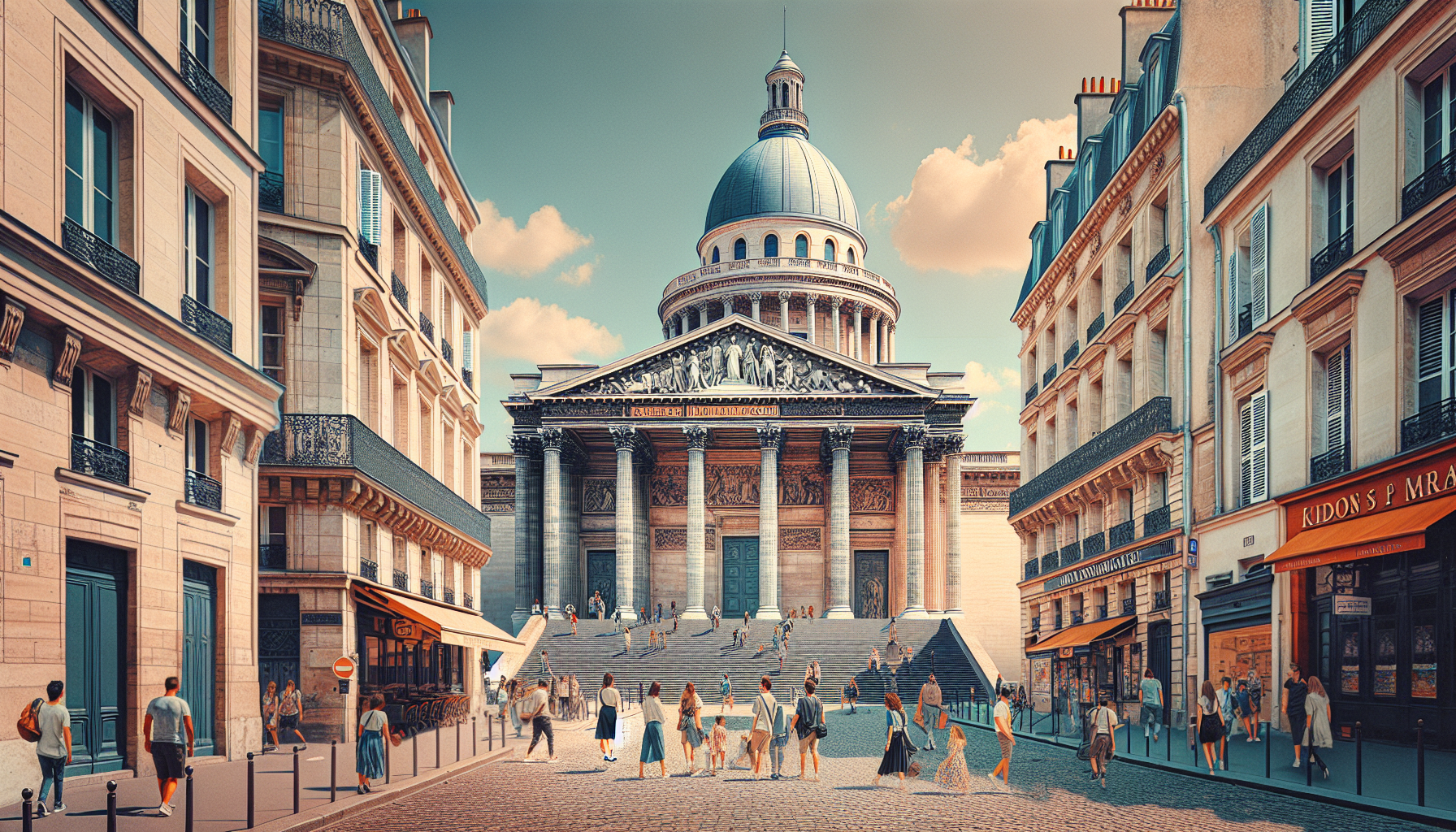
In the heart of the Latin Quarter rises a monument that is as much a keeper of France’s revolutionary spirit as it is an architectural marvel: the Panthéon. Its neoclassical façade commands the skyline, while its crypt harbors the remains of the nation’s most revered figures. For travelers seeking more than surface beauty, the Panthéon offers a journey into the depths of French history, philosophy, and artistry—a place where every stone resonates with the echoes of past centuries.
Why Visit Panthéon
The Panthéon stands as an enduring symbol of Paris’s intellectual and spiritual legacy. Originally built as a church dedicated to St. Genevieve, it became a secular mausoleum during the French Revolution—embodying the ideals of liberty, equality, and fraternity. Visitors are drawn not only to its imposing columns and intricate sculptures but also to the stories of Voltaire, Rousseau, Marie Curie, Victor Hugo, and other luminaries interred within its crypt. The Panthéon is a pilgrimage site for anyone fascinated by the forces that have shaped modern France and the world.
Stepping into Panthéon
As you approach the Panthéon, the first impression is one of awe. The vast portico, modeled after the Pantheon in Rome, invites you to ascend the broad steps and pass beneath its Corinthian columns. Inside, light filters through the dome, illuminating murals and sculptures that recount the saga of the French nation. The dome itself—a feat of engineering—offers panoramic views of Paris, rewarding those who climb its spiral staircase with a breathtaking glimpse of the city’s rooftops and landmarks. Every detail, from the marble floors to the monumental pendulum of Foucault, speaks to a relentless pursuit of knowledge and truth.
Key Information Table
| Location | Place du Panthéon, 75005 Paris, France |
|---|---|
| Opening Hours | 10:00–18:30 (Apr–Sep), 10:00–18:00 (Oct–Mar), closed Jan 1, May 1, Dec 25 |
| Official Website | https://www.paris-pantheon.fr |
| Entry Fee | €11.50 (adults), free for EU residents under 26 |
| Accessibility | Partial (main level accessible, dome climb not accessible) |
| Nearest Metro | Cardinal Lemoine (Line 10), Luxembourg (RER B) |
Immersive Cultural Experiences
To experience the Panthéon is to engage with the beating heart of French heritage. Guided tours reveal the symbolism behind its murals, which depict Joan of Arc, Charlemagne, and the philosophers whose ideas ignited revolutions. Special audio guides are available for a deeper dive into the lives and legacies of the Panthéon’s illustrious residents. Literary pilgrims leave flowers at the tombs of Hugo and Zola, while science enthusiasts marvel at the Foucault Pendulum, a visual proof of Earth’s rotation first demonstrated here in 1851. Cultural events and temporary exhibitions keep the spirit of inquiry alive, ensuring each visit offers something new.
Seasonal Festivals and Special Events
Throughout the year, the Panthéon hosts a dynamic calendar of events. During the European Heritage Days in September, visitors can access areas usually closed to the public and attend lectures by historians and curators. On Bastille Day, the monument becomes a focal point for commemorations, with performances and light shows illuminating its façade. Temporary art installations and educational workshops regularly animate the crypt and nave, creating a dialogue between the past and the present. Each event is a testament to the Panthéon’s ongoing role as a living monument to French culture.
Google Map
How to Get There
Reaching the Panthéon is effortless thanks to Paris’s efficient public transportation. The closest metro station is Cardinal Lemoine (Line 10), but the RER B line’s Luxembourg station also puts you within a short stroll through the picturesque Latin Quarter. Bus lines 21, 27, 38, 82, 84, 85, and 89 all stop nearby, making connections from other parts of the city simple. For those exploring on foot, the Panthéon is a natural stop on a walking tour that might also include the Sorbonne, Jardin des Plantes, and the vibrant cafés lining Rue Soufflot.
Nearby Attractions and Local Eats
Cluny Museum: A treasure trove of medieval art and architecture, including the stunning Lady and the Unicorn tapestries, located in the heart of the Latin Quarter.
Essential Travel Tips
To fully appreciate the Panthéon’s atmosphere, plan to arrive early in the day or late afternoon, when crowds are thinner and the play of light inside is at its most dramatic. Comfortable shoes are a must for navigating the dome’s narrow staircase, and photographers should be prepared for low-light conditions in the crypt. Tickets can be purchased online to avoid queues, and EU residents under 26 enjoy free entry—an unmissable opportunity for young travelers. Be respectful inside the crypt, as it is a place of remembrance, and consider combining your visit with a stroll through the neighboring Rue Mouffetard market for a taste of authentic Parisian life.
What Makes This Destination Unique
The Panthéon’s singularity lies in its ability to bridge eras and ideas. Here, the Enlightenment’s rationalism meets the emotion of Romanticism; the history of revolutionaries and scientists is inscribed alongside that of saints and poets. It is a sanctuary for the collective memory of France, inviting every visitor to contemplate the values and visions that have shaped a nation. Whether you come to admire its art and architecture, to pay tribute to its illustrious dead, or simply to savor the view over Paris, the Panthéon offers an experience that lingers long after you step back onto the bustling streets of the Latin Quarter. The grand dome, soaring above the city, stands as a promise that the pursuit of knowledge, freedom, and beauty endures—etched forever in the stone and spirit of Paris.