ITALY • ROME
Baths of Caracalla Rome Guide: What Makes It Different, What to See, and When to Visit
Baths of Caracalla Rome is one of the most impressive archaeological sites in the city, where colossal walls, broken vaults, mosaics, and underground service corridors still reveal the scale of imperial Roman public life.
Search Intent
This guide is for travelers who want to know whether the Baths of Caracalla is worth visiting in Rome, how long to stay, what you actually see beyond “big ruins,” when to go for the best atmosphere, and how to fit it smoothly into a Rome itinerary without wasting time.
Quick Summary
- The Baths of Caracalla is one of the grandest surviving bath complexes of ancient Rome, begun under Caracalla and inaugurated in AD 216.
- It is far less crowded than the Colosseum area but still visually massive and memorable.
- Plan around 1.5 to 2.5 hours for a satisfying visit, longer if you linger with an audio guide.
- Best time to visit is early morning or later afternoon for softer light and lower heat.
- This is one of Rome’s strongest archaeology stops for travelers who want scale, atmosphere, and fewer crowds.
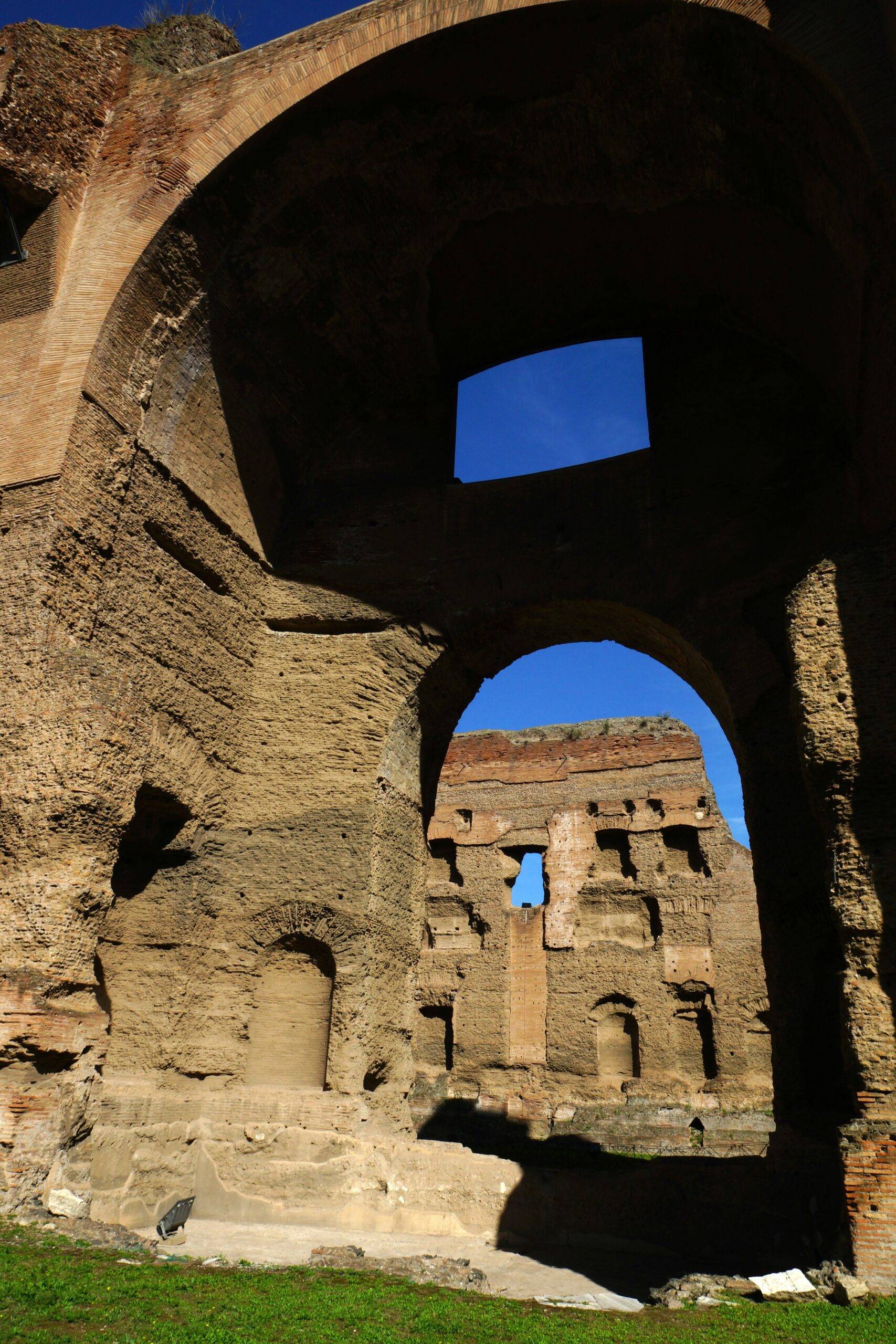
Baths of Caracalla Rome is the kind of site that immediately makes you understand how oversized Roman public architecture could be. Even before you start reading signs or tracking room functions, the walls alone tell the story. They rise high enough to make modern visitors feel physically smaller, and that sensation is important. These ruins are not modest leftovers. They still project ambition.
What surprised me most about the Baths of Caracalla is how different it feels from Rome’s more famous blockbuster sites. The Colosseum area often feels like a constant surge of motion. Caracalla feels more spacious and slower. You can stand still, trace the outlines of chambers, and imagine how an enormous leisure complex once combined bathing, exercise, libraries, gardens, and social life in one monumental environment. The atmosphere is less theatrical than the Forum and less compressed than many central sites, which makes it oddly easier to absorb.
If you like archaeology but get tired of overly crowded sightseeing, this site has a high reward-to-stress ratio. If you are not usually an archaeology person, it still works because the scale is immediately understandable. You do not need specialist knowledge to feel the force of the place.
Why This Site Matters
The Baths of Caracalla were not just baths. Official and scholarly descriptions emphasize that imperial bath complexes functioned as much more than washing facilities: they were leisure, social, and cultural centers. The site covered an enormous area and stood among the most ambitious expressions of Roman engineering and imperial image-making.
Key Visitor Information
| Official Name | Terme di Caracalla / Baths of Caracalla |
| Address | Viale delle Terme di Caracalla 52, Rome |
| Ticketing | Managed through the Musei Italiani e-ticketing service of the Ministry of Culture |
| Best Time to Visit | Early morning or late afternoon, especially in warmer months |
| Recommended Visit Length | 1.5 to 2.5 hours |
| Nearest Area Reference | South of the Colosseum / Circo Massimo zone |
| Accessibility Note | The Ministry of Culture notes parking access in front of the archaeological site for visitors with reduced mobility who arrive by car |
Open hours and ticket conditions can vary seasonally, so check the official Ministry of Culture or ticketing page before going.
History and Background
The Baths of Caracalla were begun in the early 3rd century AD under Septimius Severus and completed under his son Caracalla, with inauguration generally placed in AD 216. The complex was part of a larger Severan urban program in this area of Rome.
These baths were not small neighborhood facilities. They were among the largest and most luxurious imperial bath complexes in Rome, built with millions of bricks, supplied by the Acqua Antoniniana branch of the aqueduct system, and equipped not just for bathing but for exercise, strolling, reading, and social display. Ancient sources and later scholarship suggest a simultaneous capacity of around 1,600 bathers, which helps explain why the site still feels oversized even as a ruin.
The baths remained in use until the 6th century, when the Gothic War and disruption of water supply contributed to their abandonment. In later centuries, the site became a source of building material, and many sculptural finds from the baths ended up in major collections elsewhere. What survives today is therefore only part of the original decorative richness, but even the stripped-down ruins still communicate extraordinary scale.
What It Feels Like on Site
The first thing you notice is the air and space. Unlike tighter archaeological sites in Rome, Caracalla gives you room. Wind moves through the broken halls, birds cut across the open sky where vaults once stood, and the reddish-brown brick carries warmth differently depending on the hour. In the morning, the site can feel cool, almost austere. Later in the day, it becomes heavier and more sun-struck.
I also think the site rewards a slower pace more than people expect. At first glance it can look like “big ruins, big walls, some signs.” But once you begin imagining how each chamber functioned, the visit deepens. You start seeing process rather than rubble: hot rooms, warm transition rooms, cold plunge spaces, changing temperatures, circulation paths, service areas, and engineered movement of water and heat. That mental shift is what makes the baths come alive.
One honest drawback is that the site can feel abstract if you rush through it without context. This is not the kind of place where every section announces itself dramatically. An audio guide, map, or even a good pre-read makes a real difference here. Once you know what you are looking at, the whole site becomes much more vivid.
Main Attractions
The Monumental Core
The surviving central block gives the clearest sense of the baths’ original grandeur. Even in ruin, the proportions remain legible: huge interior volumes, structural mass, and the implied sequence of hot, warm, and cold rooms.
The Natatio
The great open-air swimming area remains one of the easiest features to visualize, because it reads as a social and cooling zone even today. This is one of the best places to pause and understand how bathing here was not merely functional but ceremonial and performative.
Mosaics and Flooring Fragments
Many visitors focus upward on the walls and vaults, but some of the most moving details are underfoot: surviving mosaics, floor patterns, channels, and the traces of how surfaces once guided both water and people.
The Underground Areas
The substructures are among the most fascinating parts of the site because they reveal the infrastructure beneath imperial spectacle. These were the working arteries that powered the baths above.
The Panoramic Exterior Views
Walking the perimeter helps you understand just how massive the original complex was. It is one thing to stand inside a chamber. It is another to step back and see how the whole structure dominated its surroundings.
Practical Tip
Go earlier in the day if the weather is warm. The site is open and expansive, which is beautiful, but also means midday sun can flatten the experience and drain your energy faster than expected.
Common Mistake
A lot of visitors treat the Baths of Caracalla as a quick add-on after bigger Rome attractions. That usually undersells the place. This site works best when it gets its own dedicated block of time instead of being squeezed into leftover energy.
Recommended Travel Route
- Start early and enter with enough time to orient yourself using the site map or guide.
- Walk the main monumental block first so you understand the scale before chasing details.
- Pause at the natatio zone and imagine the baths as a social complex, not just ruins.
- Look down as much as up to catch flooring, mosaic traces, and water-routing details.
- Visit the underground or service-related areas if open, because they change your understanding of how the baths worked.
- Finish with an exterior loop to appreciate the full mass of the complex and its setting.
How to Compare It with Other Rome Classics
| Site | Best For | Overall Feel |
|---|---|---|
| Baths of Caracalla | Massive ruins, engineering, lower crowd stress | Open, spacious, atmospheric |
| Colosseum | Iconic monument, first-time Rome essential | High-impact, crowded, symbolic |
| Roman Forum | Layered urban archaeology and political history | Dense, interpretive, historically packed |
If the Colosseum is the headline and the Forum is the textbook, the Baths of Caracalla feels like the deep-cut site that gives Rome extra dimension.
Who Should Visit?
- Travelers who love Roman archaeology but want slightly less crowd pressure
- Visitors interested in engineering, infrastructure, and urban history
- Photographers who like dramatic brick textures, scale, and open-sky ruins
- Repeat Rome visitors looking to go beyond the standard monument trio
- Anyone who wants a slower, more contemplative ancient Rome experience
FAQ
Is the Baths of Caracalla worth visiting?
Yes. It is one of Rome’s most rewarding archaeological sites for visitors who want scale, atmosphere, and a broader understanding of Roman public life beyond the city’s most crowded monuments.
How long should I spend there?
Around 1.5 to 2.5 hours is ideal for most visitors, especially if you want time to understand the layout instead of just walking through quickly.
Can I visit the underground sections?
Some underground or special-access areas may be available depending on current visitor arrangements, events, or ticketing options, so check the official site before your visit.
What is the best time to go?
Early morning or later afternoon is usually best for softer light, more comfortable temperatures, and a less fatigued visit.
Is it easy to reach?
Yes. It is in Rome’s southern central archaeological zone and is usually combined easily with Circo Massimo or other nearby sites.
Do I need tickets in advance?
It is smart to check the official Musei Italiani/Ministry of Culture system before visiting, since ticketing is managed centrally there. 7]{index=7}
Official Resources
Related Reads on Trip Nexus
Google Map
Final Thoughts
The Baths of Caracalla is one of the best places in Rome to feel the city’s imperial scale without getting swallowed by its busiest sightseeing pressure. It offers something that many famous sites no longer do as easily: room to think.
Walk slowly, imagine the baths as a living system instead of a collection of walls, and the site becomes far more powerful. You leave not just with photos of ruins, but with a clearer sense of how Roman engineering, leisure, status, and urban ambition once worked together.
If you want one archaeological site in Rome that feels monumental, atmospheric, and slightly underrated compared with the headline icons, Baths of Caracalla deserves a real place on your itinerary.