Capitoline Museums Rome Guide: What to See, Best Route, and How to Visit Without Overwhelm
Capitoline Museums Rome is one of those places that feels bigger than a museum visit. You step onto Capitoline Hill expecting a few famous statues, and then the whole setting starts working on you—the square by Michelangelo, the stone underfoot, the view over the Roman Forum, and the strange feeling that Rome is watching itself through centuries of memory.
I think this is what makes the Musei Capitolini special. It is not only about seeing masterpieces. It is about understanding how Rome presents its own identity: myth, empire, religion, civic pride, and art all layered into one museum complex. If you want a museum in Rome that gives you both iconic objects and a powerful sense of place, this is one of the strongest choices in the city.
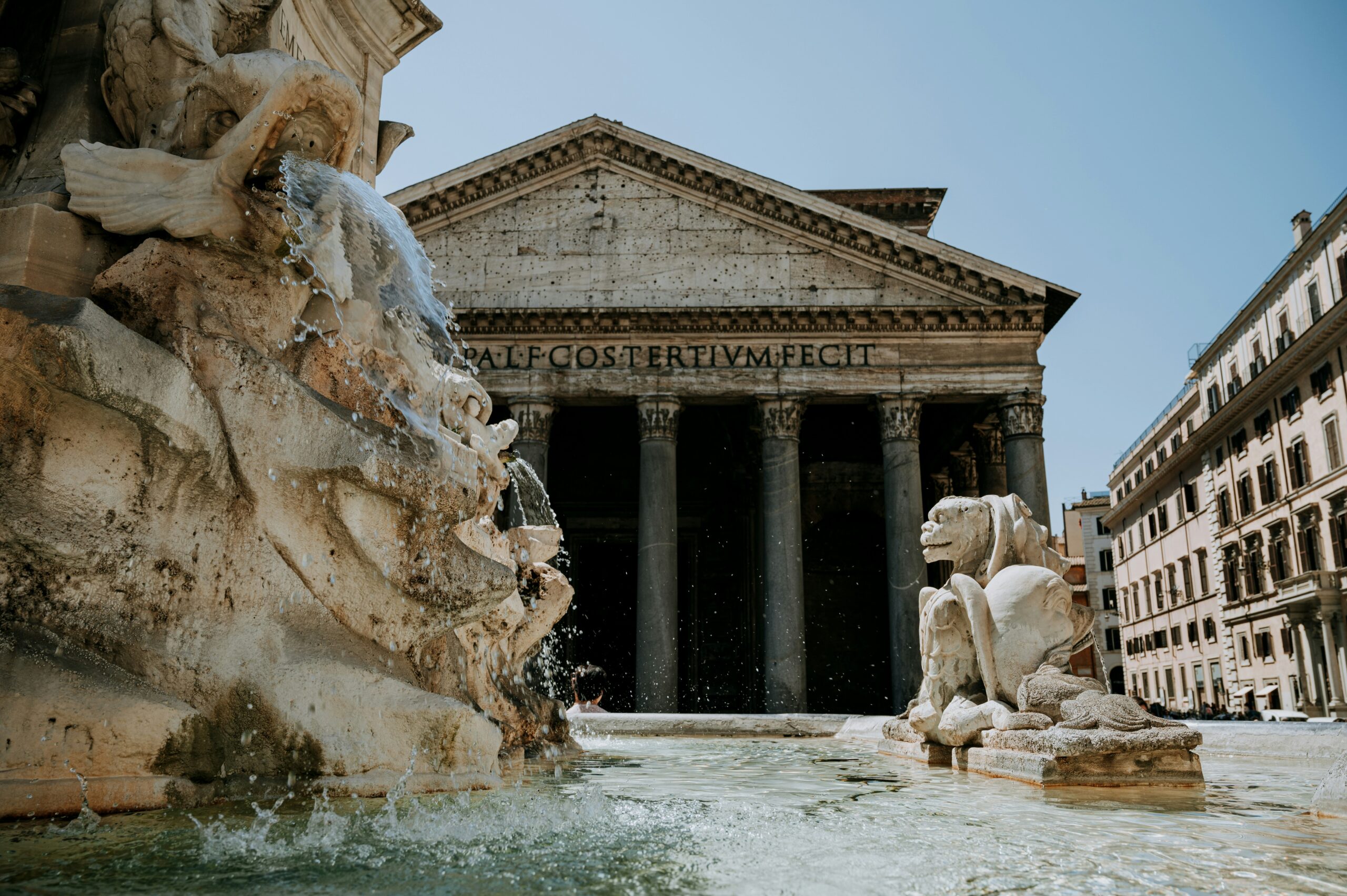 Capitoline Museums Rome exterior view with historic fountain and classical architecture on Capitoline Hill
Why Visit the Capitoline Museums?
This guide is for travelers who want more than a basic ticket-and-hours summary. It covers what the Capitoline Museums actually feel like, which masterpieces deserve your time, how to move through the complex without wasting energy, when to go for a calmer visit, and whether this museum fits your travel style better than the Vatican Museums or the Colosseum-area archaeological sites.
Quick Summary
- The Capitoline Museums sit on Capitoline Hill and combine world-famous sculptures, Renaissance architecture, and unforgettable Forum views.
- This is widely regarded as the oldest public museum complex in the world, rooted in Pope Sixtus IV’s 1471 donation of bronzes to the people of Rome.
- Top highlights include the Capitoline She-Wolf, the Capitoline Venus, the Capitoline Gaul, the Marcus Aurelius equestrian statue, and the Tabularium overlook.
- Weekday mornings are usually the easiest time to visit if you want quieter galleries and more time with the major works.
- If you enjoy history, sculpture, and a more grounded museum experience than the Vatican’s intensity, this is one of Rome’s smartest cultural stops.
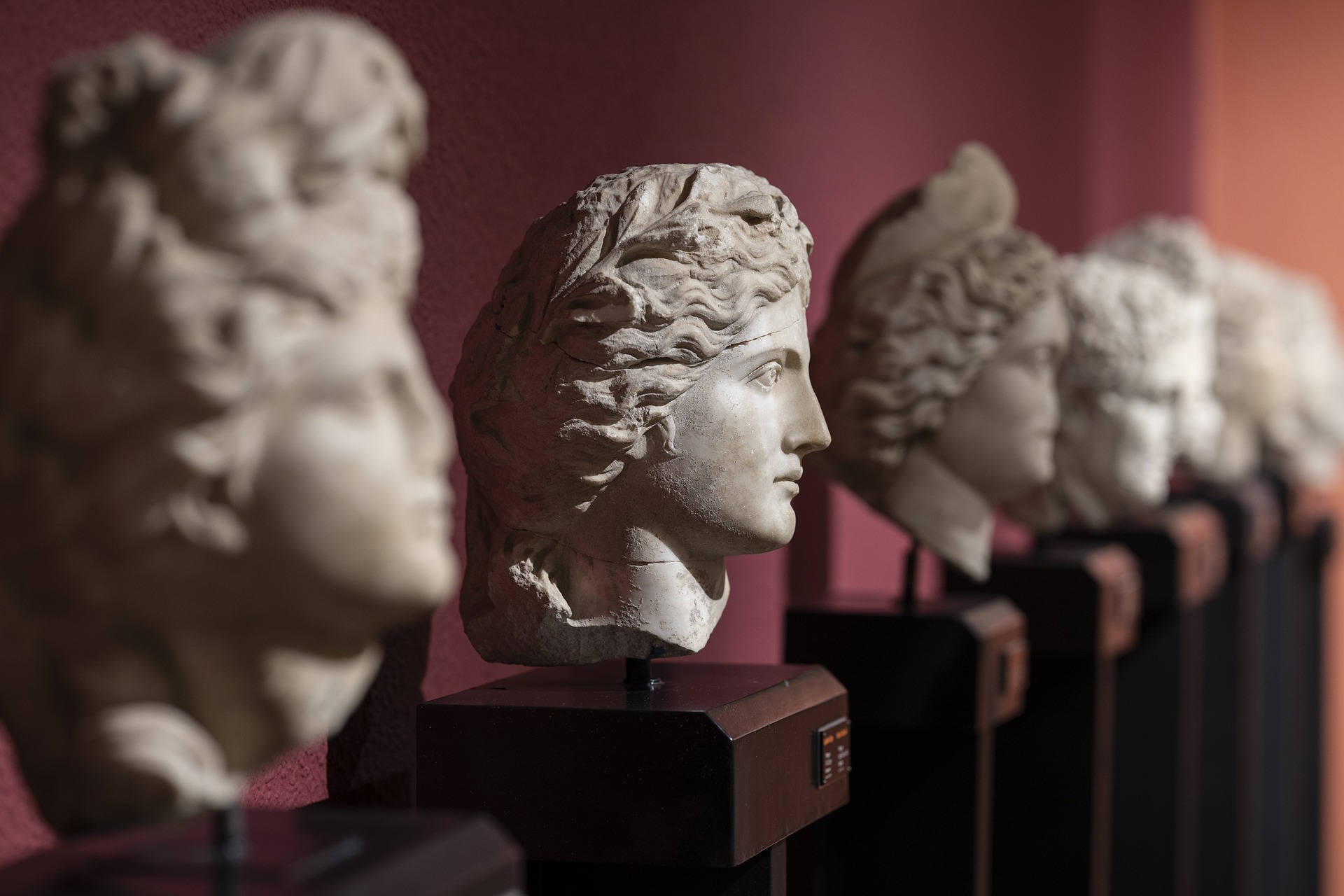 Marble bust sculptures displayed inside the Capitoline Museums Rome, showcasing classical Roman artistry
Key Visitor Information
| Opening hours | Every day 9:30 AM–7:30 PM, with last admission one hour before closing. Closed on May 1 and December 25. Special holiday hours may apply on certain dates. |
| Standard admission | Ordinary museum-only admission is generally €15 for adults and €9.50 concession, but current prices can rise when temporary exhibitions are included. |
| Rome resident rule | Residents of Rome and the metropolitan area currently receive free admission with valid proof of residence. |
| Address | Piazza del Campidoglio 1, 00186 Rome, Italy |
| Closest area | Capitoline Hill, between Piazza Venezia and the Roman Forum |
| Best time to visit | Weekday mornings, especially soon after opening, for calmer circulation and better pacing through the galleries. |
| Accessibility | The museum provides lifts, stairlifts, platforms, and support for visitors with mobility needs, plus tactile resources for blind and visually impaired visitors. |
| Official map search name | Musei Capitolini |
What It Feels Like Inside
The first surprise is that the Capitoline Museums do not feel like a single building. They feel like a sequence of spaces that slowly reveal Rome’s self-image. One moment you are in a grand civic interior, the next you are face to face with an ancient bronze, and then suddenly you are looking out across the Roman Forum through old stone structures that still feel half-architectural, half-archaeological.
I made the mistake, the first time I studied the layout, of assuming this would be a quick “see the famous statue and leave” museum. It is not. The complex encourages wandering, pausing, doubling back, and looking again. That is especially true in the quieter rooms, where the silence gives the sculptures an almost theatrical presence.
Insider feel: This museum rewards slow travelers. If your schedule is overloaded, the Capitoline Museums can become just a checklist stop. If you give it two to three unrushed hours, it becomes one of Rome’s most atmospheric cultural experiences.
History and Cultural Context
The Capitoline Museums trace their origin to 1471, when Pope Sixtus IV donated important ancient bronzes to the people of Rome. That act is one reason the complex is often described as the oldest public museum in the world. The location itself adds another layer of meaning: Capitoline Hill was one of the most symbolically charged places in ancient Rome, and later became a key civic space in papal and Renaissance Rome.
The surrounding piazza was shaped by Michelangelo’s redesign, giving the museum complex a Renaissance order that still frames the experience today. The collections spread across Palazzo dei Conservatori and Palazzo Nuovo, linked through galleries and routes that bring together sculpture, inscriptions, painting, architecture, and archaeology.
What I like here is that the museum does not pretend Rome was one simple story. Instead, it shows how the city kept rewriting itself. Republican memory, imperial image-making, Christian transformation, civic collecting, and modern display are all present at once. That makes the visit feel richer than many museums that focus on only one era.
Main Highlights You Should Not Miss
1) Capitoline She-Wolf (Lupa Capitolina)
This is the emblem everyone knows, but it still lands with force in person. The she-wolf became a symbol of Rome, and the museum notes that Sixtus IV’s donation brought it to the Capitoline. The twins were later additions, transforming the sculpture into one of the city’s most powerful visual myths.
The object is fascinating not only for its symbolism, but also for the debate and layered history surrounding it. Even travelers who are not usually drawn to “famous objects” tend to stop here longer than expected.
2) Capitoline Venus
The Capitoline Venus has a quieter presence, but it can be one of the most memorable works in the museum. Found in the 17th century and donated to the museum in 1752, the sculpture belongs to the Venus Pudica tradition and rewards close looking rather than hurried photography.
I would not rush this room. After the more overtly symbolic works, the Venus feels intimate and almost psychological. It is one of those pieces that softens the pace of the visit.
3) Capitoline Gaul
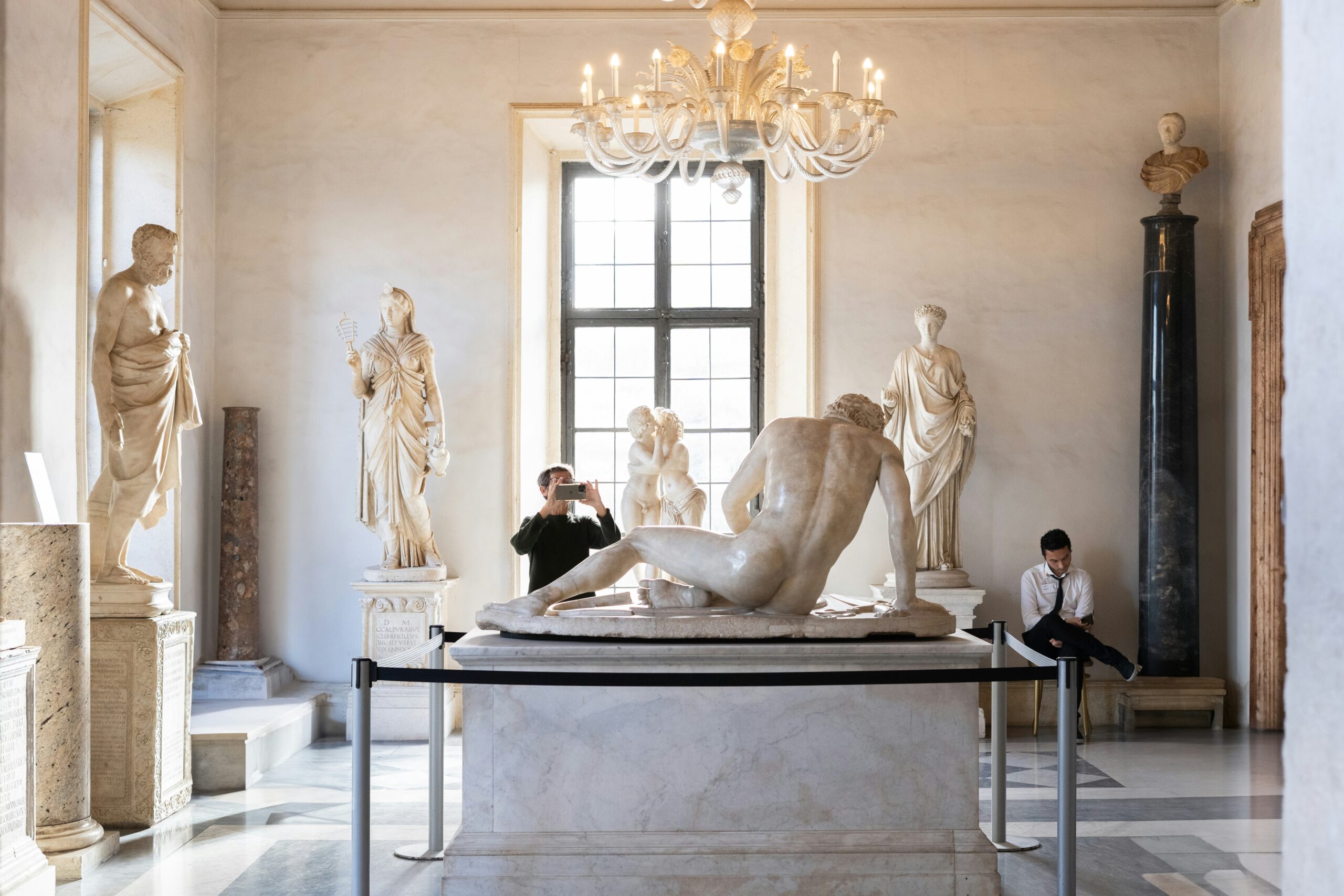
Often called the Dying Gaul, this sculpture remains one of the emotional peaks of the collection. It is a Roman replica connected to the Pergamene victory monuments. The figure’s collapse, tension, and dignity make it one of the great sculptural studies of human vulnerability in classical art.
If I had to name one sculpture in the museum that lingers emotionally after the visit, this might be it.
4) Marcus Aurelius Exedra
The bronze equestrian statue of Marcus Aurelius is another major reason to come. The original now stands inside for protection, while a replica occupies the piazza outside. Seeing it indoors changes your understanding of scale and metalwork in a way no photo really prepares you for.
5) Tabularium and Forum View
The Tabularium remains underneath the Palazzo Senatorio and once served the Roman state as an archive for official records. Today, this area matters not just historically but experientially: it gives the visit one of its best visual payoffs, opening toward the Roman Forum and reminding you that the museum is embedded in the city’s ancient core.
Practical Travel Tips
- Book online when possible, especially if a temporary exhibition is running.
- Do not underestimate how much standing you will do. Wear stable shoes, not just stylish city shoes.
- Give yourself at least 2 hours. A comfortable visit is closer to 2.5–3 hours.
- Go earlier in the day if you want more breathing room around the major sculptures.
- Pair this museum with Piazza Venezia, the Roman Forum overlook, or a slower lunch nearby rather than cramming in another major museum immediately after.
Tip: The emotional rhythm of the museum is better if you alternate between “masterpiece chasing” and “slow rooms.” Don’t spend all your energy in the first 30 minutes.Warning: If you visit right after a long Colosseum or Forum walk in summer, fatigue hits fast here. I would honestly choose one heavy archaeological block per half day, not two.
Recommended Route for First-Time Visitors
- Enter and orient yourself without rushing the first gallery.
- Go directly to the Capitoline She-Wolf early before surrounding traffic builds.
- Move through the core sculpture rooms and make time for the Capitoline Venus.
- Continue toward the Capitoline Gaul and the other major marble highlights.
- Pause before moving on—this is a good midpoint reset rather than speed-walking the entire circuit.
- Head to the Marcus Aurelius Exedra for one of the collection’s most impressive bronzes.
- Finish through the Tabularium / Forum-facing section so your visit ends with architecture and landscape, not just interior galleries.
Best total time: 2 to 3 hours. If you love Roman sculpture and museum pacing, allow even longer.
Capitoline Museums vs Other Rome Museum Experiences
| Category | Capitoline Museums | Vatican Museums | Colosseum / Forum Zone |
|---|---|---|---|
| Best for | Roman identity, sculpture, atmosphere | Massive collections, iconic ceilings, scale | Outdoor ruins, ancient urban landscape |
| Crowd intensity | Moderate | Usually very high | High in peak seasons |
| Pacing | Manageable and rewarding | Can feel overwhelming | Physically demanding |
| My honest take | Best all-around Roman art/history balance | Essential once, but exhausting | Essential for ruins, not for calm reflection |
Who Should Visit the Capitoline Museums?
Great fit for: history lovers, art travelers, couples, solo travelers, repeat visitors to Rome, travelers who prefer depth over spectacle, and anyone who wants a museum that still feels connected to the city outside its walls.
Less ideal for: travelers with only a few hours in Rome who mainly want blockbuster sites, very young children with low museum stamina, or visitors expecting a flashy interactive format.
My view: if you already know you dislike giant museum crowds, choose the Capitoline Museums before choosing another oversized indoor attraction.
FAQ
How long do you need at the Capitoline Museums?
Most travelers should allow 2 to 3 hours. If you like Roman sculpture and want a slower pace, you could easily stay longer.
Are the Capitoline Museums worth visiting?
Yes, especially if you want a museum that combines major masterpieces with strong historical atmosphere and excellent views over ancient Rome.
What is the most famous artwork inside?
The Capitoline She-Wolf is the best-known symbol, but the Capitoline Venus, Capitoline Gaul, and Marcus Aurelius statue are also major highlights.
Is the museum good on a rainy day in Rome?
Yes. It is one of the best rainy-day cultural choices in central Rome because it is substantial without being overwhelmingly large.
Is it better than the Vatican Museums?
They offer very different experiences. The Vatican is bigger and more famous, but the Capitoline Museums are often calmer, easier to pace, and more focused on Rome itself.
Can visitors with mobility needs access the museum?
Yes, the museum provides accessibility supports including lifts, stairlifts, and platforms, and also offers dedicated resources for visually impaired visitors.
Should you buy tickets in advance?
That is the safer choice, especially when temporary exhibitions are running or if you want a smoother entry during busy seasons.
More Trip-Nexus Italy Guides
Official and Authoritative Resources
Capitoline Museums Location
Final Thoughts
The Capitoline Museums are not the loudest museum experience in Rome, and that is exactly why many travelers end up loving them. They give you masterpieces without total sensory overload, history without dryness, and views that reconnect the objects to the city that produced them.
If you want one Roman museum that feels intelligent, grounded, and deeply atmospheric, this is a superb choice. Personally, I would recommend it most to travelers who want Rome to feel human-scale again after the city’s bigger headline sites.
Plan your visit early, wear comfortable shoes, and leave just enough room in your day to linger. The Capitoline Museums are at their best when you do not rush them.