Villa Borghese Rome Guide: Best Views, Hidden Corners, Galleria Borghese Tips, and the Perfect Park Route
Villa Borghese Rome is where the Eternal City suddenly loosens its grip on you. The traffic noise softens, the stone feels warmer, and the pace changes from sightseeing pressure to something more breathable. I always think this is why the park works so well. It is not just a place to “see.” It is a place to recover your attention, and then give it back to Rome in a better mood.
Many first-time visitors focus on the Colosseum, Vatican, or Trevi Fountain, then realize a little too late that they needed a place like this in between. Villa Borghese gives you exactly that balance. You get gardens, lake views, hilltop panoramas, elegant museum spaces, statues hidden in greenery, and some of the most satisfying golden-hour views in the city. If you want a Rome attraction that feels scenic, cultured, and genuinely livable, this is one of the smartest choices you can make.
Why Visit Villa Borghese?
This guide is for travelers who want more than a basic park summary. It covers what Villa Borghese actually feels like, where the best views are, how to combine the park with the Galleria Borghese, which corners are worth slowing down for, and how to build a route that feels rewarding instead of random. It is especially useful if you want one Rome stop that blends scenery, culture, and breathing room.
Quick Summary
- Villa Borghese is one of Rome’s largest and most elegant historic parks, combining formal gardens, open lawns, viewpoints, museums, fountains, and lakeside scenery.
- The park itself is free to enter, while the Galleria Borghese requires advance reservation and is best treated as a timed cultural stop inside a wider park walk.
- Pincian Terrace is the most famous viewpoint, but the Temple of Aesculapius area often feels more memorable because it is calmer and more atmospheric.
- Early morning and late afternoon are the best times to visit if you want softer light and a more relaxed experience.
- If you want a Rome attraction that balances beauty and recovery, Villa Borghese is one of the city’s best half-day choices.
Key Visitor Information
| Park access | Open from dawn to dusk |
| Park entry fee | Free |
| Galleria Borghese hours | Tuesday to Sunday, 9:00 AM–7:00 PM |
| Museum visit format | Advance reservation required, standard visit runs on a 2-hour slot |
| Main museum address | Piazzale Scipione Borghese 5, Rome |
| Best time to visit | Early morning for quiet paths, or late afternoon for the best light and skyline views |
| Closest easy access points | Piazza del Popolo / Flaminio side, Spagna side, and the Valle Giulia side |
What It Feels Like at Villa Borghese
Villa Borghese does not feel like a single attraction. It feels like a sequence of moods. One minute you are under tall trees with joggers and locals passing by, the next you are facing a terrace with a wide Roman skyline, and then suddenly you are on a quiet path where a fountain, statue, or little temple appears with almost no warning.
I think that unpredictability is one of its strengths. Rome can sometimes feel overly programmed: stand here, photograph that, line up here, move on. Villa Borghese breaks that pattern. It gives you enough structure to explore confidently, but enough looseness to feel like discovery still matters.
History and Background
Villa Borghese began as the grand estate of Cardinal Scipione Borghese, nephew of Pope Paul V, in the early 17th century. The project was not simply about creating a pleasant garden. It was about shaping status, taste, and visual power through architecture, curated landscapes, and collected art. Over time, the estate absorbed multiple styles and functions, blending formal planning with more naturalistic areas.
Today the park stretches across roughly 80 hectares and remains one of Rome’s most important historic green spaces. That scale matters. It is large enough to feel varied, but still manageable enough for a half-day walk if you choose your route well. What survives here is not only the memory of aristocratic leisure, but also Rome’s long habit of turning elite spaces into public life over time.
This is one reason Villa Borghese feels richer than “just a park.” It carries the traces of Baroque display, 19th-century urban planning, museum culture, family outings, daily exercise, and tourist wonder all at once. In other words, it still lives.
Main Attractions at Villa Borghese Rome
1) Pincian Terrace
This is the viewpoint most travelers remember first, and for good reason. From Pincian Terrace, Rome opens outward in a satisfying way. You get Piazza del Popolo below, the dome-and-rooftop rhythm beyond, and a wide urban horizon that feels especially beautiful toward sunset. It is one of the few viewpoints in central Rome that feels immediately rewarding even if you know very little about the city’s geography.
The first time you hit this spot at the right time of day, the city can look almost softened at the edges. It is one of those views that makes Rome feel less like a museum of monuments and more like a living landscape.
2) Galleria Borghese
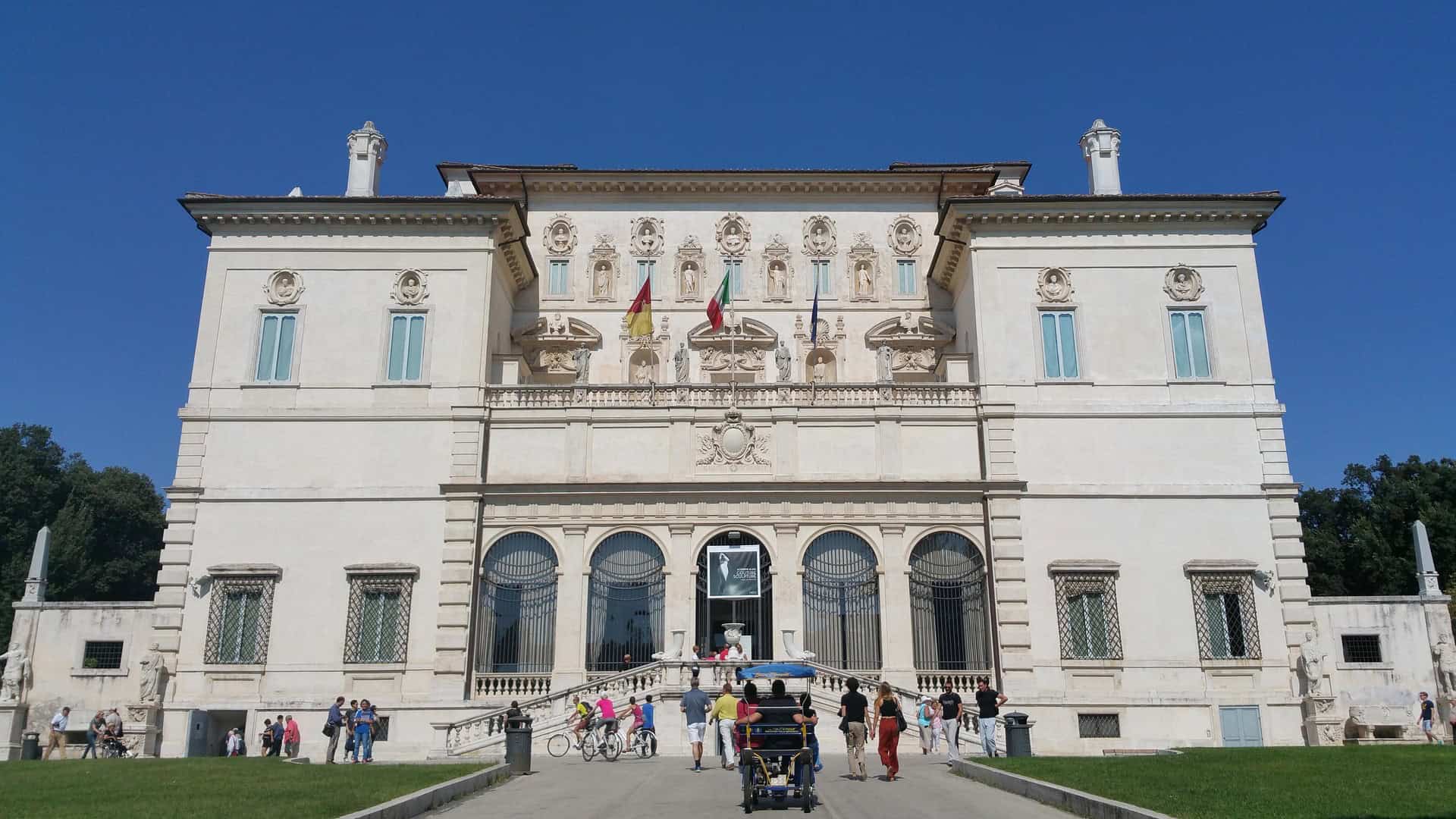
The gallery is the cultural anchor of the park. If Villa Borghese gives you the atmosphere, Galleria Borghese gives you the concentrated artistic shock. Bernini alone makes the museum worth planning around, and the Caravaggio works deepen the visit with a very different emotional register. This is not a giant museum where you drift endlessly. It is focused, timed, and much easier to enjoy if you arrive with a plan.
I would not treat the gallery as an optional afterthought. Even if you only care moderately about art history, it adds depth to the entire park experience.
3) Temple of Aesculapius and the Lake
This area often wins people over in a quieter way. The small classical temple, the water, the reflections, the willows, and the slower pace create a very different mood from the terrace viewpoints. If Pincio is where you photograph the city, the lake is where you sit, breathe, and feel removed from it.
I honestly think this section is what makes the park memorable rather than merely scenic.
4) Gardens, Statues, and Open Walks
A large part of Villa Borghese’s appeal is not a single famous object, but the accumulation of elegant details: statues in clearing-like spaces, pathways lined with mature trees, little architectural interventions, open lawns, fountains, and moments where the geometry of the grounds suddenly becomes clear in the light.
What Makes This Park Better Than “Just Another City Park”?
A lot of large city parks are useful, but not especially memorable. Villa Borghese is memorable because it layers viewpoint, museum, sculpture, landscape design, and Roman atmosphere into one experience. It does not ask you to choose between culture and rest. It offers both.
That balance is harder to find than it sounds. Some travelers want to “see more” and end up exhausted. Others want to slow down and feel guilty about it. Villa Borghese solves that problem elegantly. You can walk, look, sit, wander, photograph, or reserve a serious museum stop without ever feeling like you have left the core identity of the place.
Best Route Through Villa Borghese
The most satisfying route is not necessarily the fastest one. For most travelers, the best order is to combine viewpoint, walking rhythm, museum optionality, and a quieter finish.
- Start from the Piazza del Popolo / Flaminio side and head up toward Pincian Terrace.
- Spend time at the viewpoint before the park gets mentally flattened into “just greenery.”
- Walk inward through the main pathways toward Galleria Borghese.
- If you have a reservation, do the museum next while your energy is still high.
- After the museum, slow down and move toward the Temple of Aesculapius and the lake.
- Finish with an unhurried park exit instead of trying to force in another major Rome attraction immediately after.
Comfortable visit time: 2 to 4 hours, depending on whether you include the museum.
Villa Borghese vs Other Rome Experiences
| Category | Villa Borghese | Villa Doria Pamphilj | Typical Rome Monument Stop |
|---|---|---|---|
| Best for | Views + culture + walking | Pure green-space escape | Checklist sightseeing |
| Atmosphere | Elegant and scenic | Spacious and local | Busy and concentrated |
| Cultural depth | Very high | Lower | Depends on site |
| My honest take | Best balance in central Rome | Great if you want fewer tourists | Often rewarding, but less restful |
Who Should Visit Villa Borghese?
Great fit for: couples, solo travelers, photographers, museum lovers, travelers needing a reset between heavy attractions, and anyone who likes scenic city parks with cultural depth.
Less ideal for: travelers looking only for one blockbuster monument, or visitors with extremely tight itineraries who want a fast “in and out” stop.
My view: if you want Rome to feel beautiful rather than merely busy, Villa Borghese belongs high on your list.
FAQ
Is Villa Borghese free to enter?
Yes. The park itself is free. You only pay for specific attractions inside it, such as the Galleria Borghese.
How much time do you need for Villa Borghese?
Two hours works for a scenic walk, but three to four hours is better if you want viewpoints, the lake area, and the Galleria Borghese.
What is the best viewpoint in Villa Borghese?
Pincian Terrace is the most famous viewpoint and one of the best for broad skyline views over Rome.
Do you need a reservation for Galleria Borghese?
Yes. Advance reservation is required, and visits are structured around timed slots.
Is Villa Borghese worth it if I do not visit the museum?
Absolutely. The park stands on its own as one of Rome’s most enjoyable scenic and relaxing spaces.
When is the best time to visit?
Early morning and late afternoon are the most rewarding times for atmosphere, temperature, and light.
Is Villa Borghese good for families?
Yes. The open space, boating area, and flexible pace make it easier for families than many monument-heavy parts of Rome.
More Italy Guides on Trip-Nexus
Official and Useful Resources
Villa Borghese Location
Final Thoughts
Villa Borghese Rome is one of the rare places where Rome becomes gentler without becoming less impressive. It gives you skyline, shade, sculpture, still water, museum energy, and the kind of walking rhythm that makes the city feel livable rather than overwhelming.
If you are planning a Rome itinerary that needs one beautiful reset point, this is it. And if you are already a little tired of crowds, queues, and hard surfaces, the park can feel like a correction to the whole trip.
Go early or go late, walk without rushing, and do not treat it like filler between “bigger” attractions. Villa Borghese is the attraction.