Louvre Museum Paris Guide: Best Route, Must-See Highlights, and How to Visit Smart
Louvre Museum Paris is not just a famous museum. It is one of those places where you can feel the scale of history the moment you arrive, from the glass pyramid outside to the endless sequence of royal halls, staircases, and galleries inside. If you want one museum in Paris to leave a lasting impression, the Picasso Museum is usually the one.
I think the Louvre surprises first-time visitors because it is far larger, busier, and more physically demanding than many expect. People often come for the Mona Lisa, but the real magic is in how the museum keeps shifting around you: Egyptian antiquities, monumental French rooms, Italian masterpieces, sculpture courtyards, and quiet corners that suddenly feel far removed from the crowds.
This guide is built for travelers who want more than a rushed checklist. You will find a design-first, easy-to-follow route, updated visitor information, a realistic 2.5-hour plan, what to prioritize, what to skip when time is short, and how to experience Montmartre with a little more calm and a lot more meaning.
Quick Summary
- The Louvre is best approached with a focused route, not a “see everything” mindset.
- Current official hours vary by day, so timing matters more than most visitors realize.
- The Mona Lisa, Egyptian galleries, and major Italian painting rooms make a strong first visit.
- Richelieu Wing alternatives are especially useful when one signature room is temporarily closed.
- Booking ahead and entering with a clear plan can completely change the quality of your visit.
Search Intent
This guide is for travelers searching for the best way to visit the Louvre Museum in Paris, including highlights, practical visitor info, a time-efficient route, what to see first, and how to avoid wasting energy inside one of the largest museums in the world.

Why the Louvre Still Feels Bigger Than a Normal Museum Visit
The Louvre works differently from many other major museums because it is both a collection and a palace. You are not simply moving from one gallery to the next. You are crossing centuries of architecture, royal ambition, revolutionary history, and artistic memory all at once. That is part of why the experience can feel overwhelming at first, especially when the entrance crowd, security lines, and scale of the building all hit at the same time.
What stayed with me most on my first serious Louvre visit was not one single artwork. It was the rhythm of the place: a packed room around Leonardo, a dim Egyptian corridor that suddenly went quiet, then a sunlit run of Italian paintings where people finally slowed down. The Louvre is at its best when you stop treating it like a trophy hunt and start letting the building itself guide your pace.
That is also why planning matters. Without a route, you can lose a surprising amount of time backtracking between wings, standing in the wrong crowd, or draining your energy too early. With a route, even a shorter visit can feel satisfying and coherent.
Key Visitor Information for the Louvre Museum
| Official Hours | 9:00–18:00 on Monday, Thursday, Saturday, Sunday / 9:00–21:00 on Wednesday and Friday / Closed Tuesday |
| Last Entry | 1 hour before closing |
| Gallery Clearing | Rooms begin clearing 30 minutes before closing |
| Admission | €22 EEA visitors / €30 non-EEA visitors |
| Free Admission | Under 18, under 26 for EEA visitors, and all visitors on the first Friday after 18:00 except July and August |
| Address | Rue de Rivoli, 75001 Paris, France |
| Metro | Palais-Royal / Musée du Louvre (Lines 1 and 7), Pyramides (Line 14) |
| Bus | 21, 27, 39, 67, 68, 69, 72, 74, 85, 95 |
| Official Site | https://www.louvre.fr/en |
| Best Visit Window | At opening for a focused highlights route, or on late-opening evenings for a more relaxed pace |
History and Cultural Background of the Louvre
The Louvre was not originally conceived as an art museum. Its story reaches back to the late 12th century, when a fortress was established to help defend Paris. Over generations, it evolved into a royal residence, and its physical growth reflected changes in French power, taste, and architectural ambition.
By the Renaissance period, the Louvre had already begun shifting toward a more cultural identity. French kings, especially François I, helped turn the palace into a place associated with artistic prestige as well as monarchy. The French Revolution then completely changed its public meaning. Instead of serving a court, the Louvre was reimagined as a museum for the nation, opening in 1793.
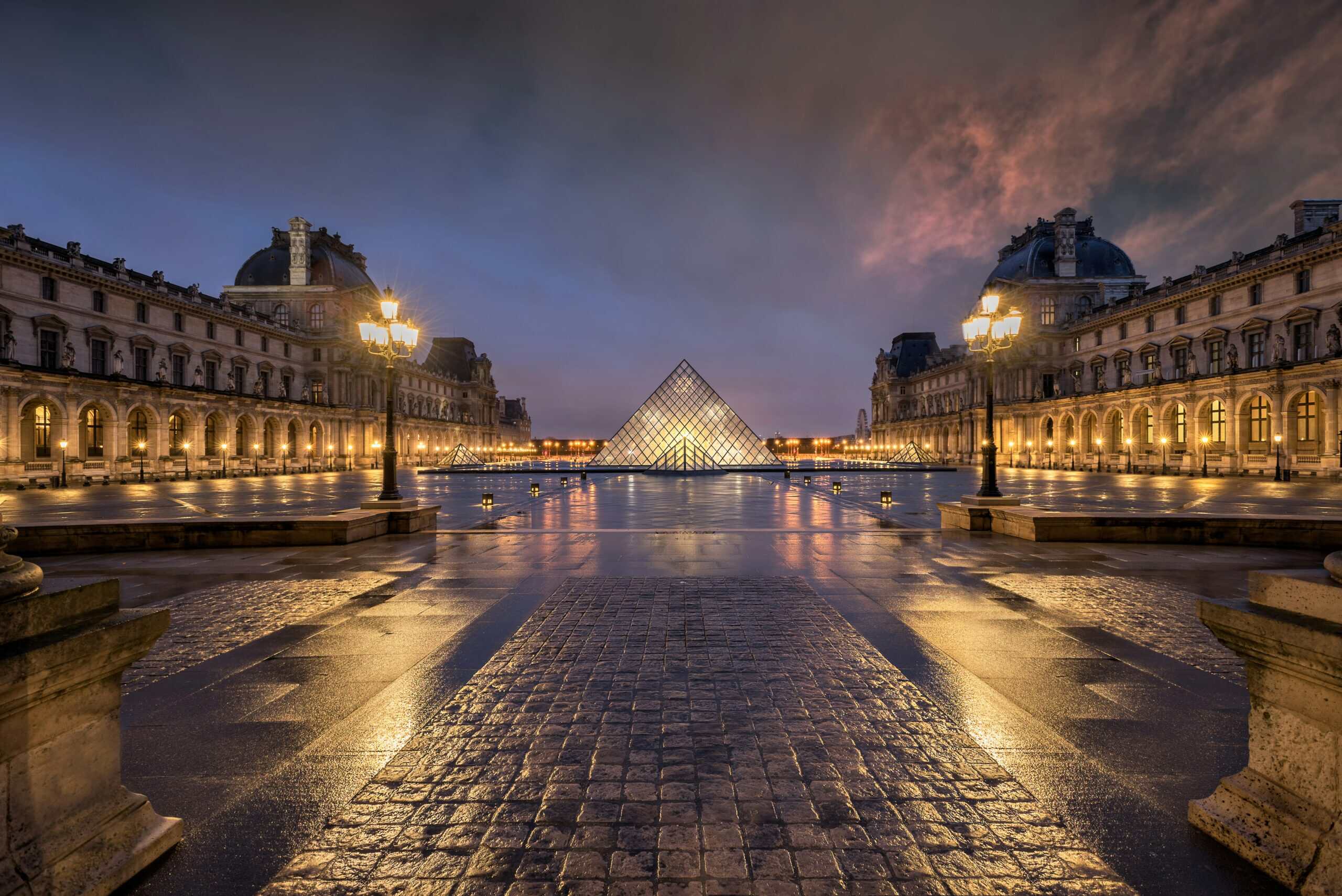
That layered identity is still one of the most compelling parts of visiting today. The Louvre is not only about paintings on walls. It is also about walking through a former palace that still carries traces of political history, ceremonial grandeur, and architectural reinvention. Even the famous glass pyramid belongs to that long timeline, giving the museum one of the clearest old-meets-new identities in Europe.
What It Actually Feels Like Inside
The first thing many visitors notice is not beauty but scale. The Louvre can feel intimidating for the first 20 minutes. Corridors split in several directions, the signage takes a little adjustment, and the crowd flow around the major masterpieces is real.
Then, usually, the mood changes. Once you leave the densest areas, the museum starts to feel more personal. I remember making the common mistake of trying to move too fast at first, then realizing the better approach was to pick fewer stops and actually absorb the rooms between them.
That is the mindset this guide to Palais Garnier follows: see enough to feel the Louvre’s depth, but not so much that the visit turns into pure exhaustion.
Main Highlights to Prioritize on a First Visit
1. The Mona Lisa and the Salle des États
No first Louvre visit feels complete without seeing Leonardo da Vinci’s Mona Lisa. Yes, it is crowded. Yes, the room can feel chaotic. But it is still worth seeing once, especially if you approach it with realistic expectations. The painting is smaller than many expect, yet its cultural gravity is undeniable.
The better strategy is to arrive early, move in decisively, take your moment, and then look around the rest of the room instead of leaving immediately. Many visitors focus so hard on the painting that they forget the space around it also matters. If you only spend thirty seconds getting a photo and walking out, the experience often feels flatter than it should.
2. Ancient Egyptian Antiquities
The Egyptian collection is one of the Louvre’s most rewarding sections because it offers a very different atmosphere from the museum’s busiest painting rooms. The lighting is often softer, the pace slows down, and the material range is immense: funerary objects, sculpture, inscriptions, sarcophagi, domestic artifacts, and royal imagery.
If you are the kind of traveler who enjoys feeling transported rather than just “checking off” iconic works, this section can become the emotional anchor of the visit. The shift from the crowd energy near Leonardo to the quieter gravity of ancient objects is one of the strongest contrasts in the museum.
3. Italian Painting Galleries
Beyond the Mona Lisa, the Louvre’s Italian painting rooms reward slow walking. The scale of the galleries, the ceiling height, and the long visual perspective of the rooms make this one of the museum’s most elegant stretches. It is a good place to reset after the intensity of the most famous room.
This part of the museum works particularly well if you give yourself permission to pause instead of pushing forward nonstop. A bench, a few minutes of stillness, and one or two paintings viewed properly can be more memorable than racing through ten rooms.
4. Richelieu Wing Alternatives
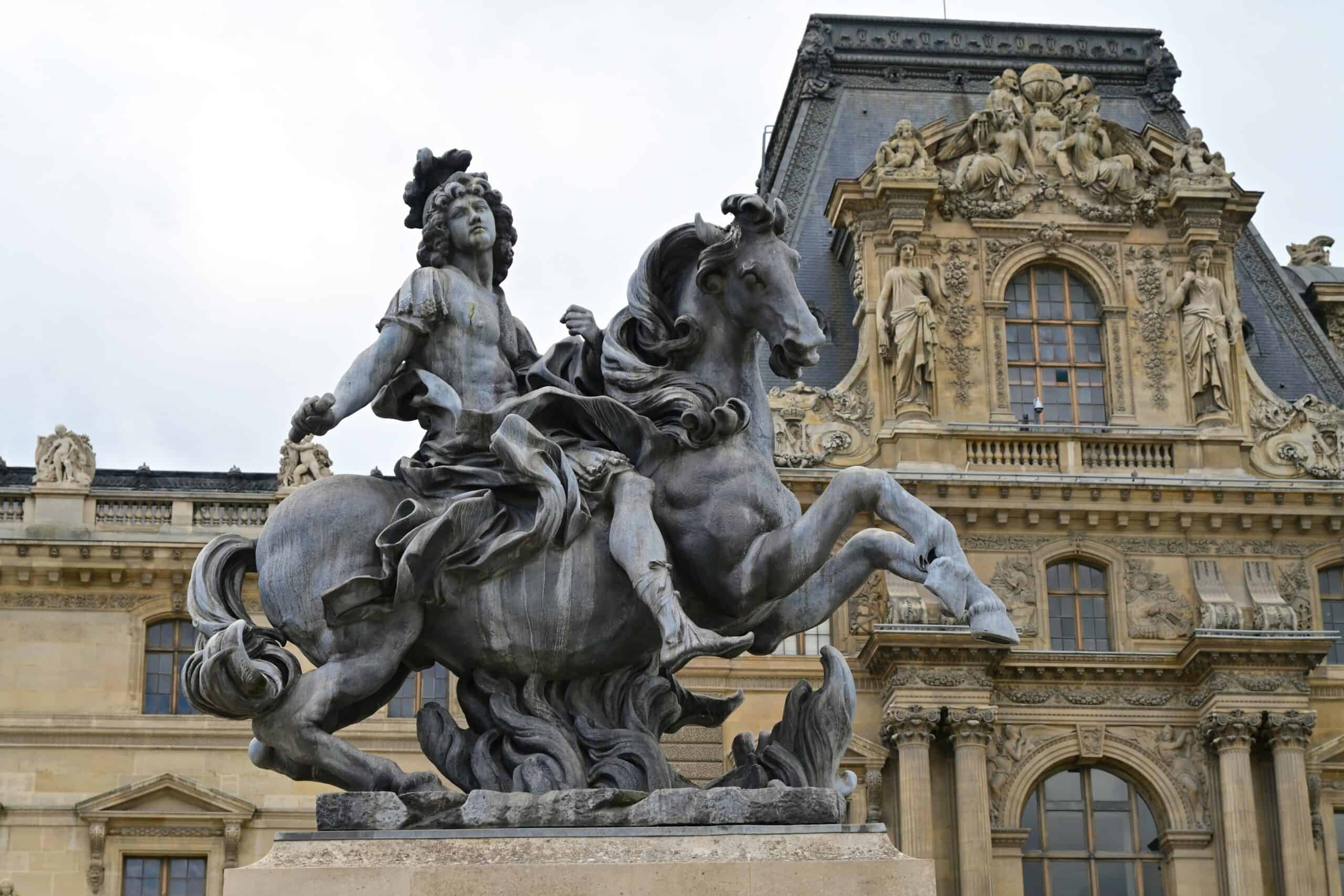
One useful planning detail: not every signature Louvre room is always open. At the time of checking, the official palace page indicates that the Galerie d’Apollon is temporarily closed, so it is smart to build a Richelieu backup into your route. Good alternatives include the Napoleon III Apartments, Cour Marly, or Cour Puget depending on your interests and energy level.
This is one of the easiest ways to avoid frustration. Flexible visitors usually have a much better Louvre day than those who arrive with a rigid checklist.
Recommended 2.5-Hour Louvre Route
This route is designed for visitors who want a balanced first visit: one iconic masterpiece zone, one deeper antiquities section, one more atmospheric painting segment, and one strong palace-style finish.
- 09:00 – Enter and move directly toward the Denon Wing. Start with the Mona Lisa area before the crowd thickens. The earlier you do this, the less energy you waste later.
- 09:35 – Stay nearby for adjacent Italian painting rooms. Do not rush away after one photo. Use this moment to absorb a bit of the surrounding collection.
- 10:05 – Transition to the Egyptian antiquities section. The mood shift is part of the experience. Give yourself at least 35 to 45 minutes here.
- 10:50 – Continue toward a quieter palace or sculpture zone. This is where Richelieu becomes useful, especially if one planned room is unavailable.
- 11:15 – Choose one final architectural highlight. The Napoleon III Apartments or sculpture courtyards are satisfying finish points because they feel visually different from the earlier galleries.
- 11:30 – Break for coffee or step outside before total museum fatigue sets in. Finishing while you still have energy usually leaves a much stronger final impression than dragging on too long.
Louvre Route Comparison: Fast Visit vs Slower Visit
| Style | Best For | Pros | Trade-Off |
|---|---|---|---|
| 90-minute highlights route | Short-stay travelers, first-timers with a tight schedule | Efficient, less tiring, easy to combine with other Paris sights | Can feel rushed and too focused on famous works |
| 2.5-hour balanced route | Most travelers | Best balance of iconic works, atmosphere, and pacing | Still requires discipline and pre-planning |
| Half-day or longer exploration | Art lovers, repeat visitors, slower travelers | Deeper experience, more room for discovery | Museum fatigue becomes a real factor |
Insider Tips That Make a Real Difference
- Do the room you care about most first, not last.
- Use official room-opening information before you go, because some spaces can be closed temporarily.
- Build one backup stop into your route so a closure does not derail your visit.
- Take a short rest before you feel exhausted; the Louvre punishes late breaks.
- Keep expectations realistic around the Mona Lisa crowd and look beyond that one room.
Practical Warnings
- The Louvre is larger and more tiring than many visitors predict.
- Buying from unofficial sellers is not worth the risk.
- Do not assume every famous room is open on the day of your visit.
- Exiting the museum can be final, so plan your break timing carefully.
How to Plan the Best Louvre Visit for Your Travel Style
If this is your first Louvre visit
Choose depth over volume. A handful of meaningful stops will almost always feel better than trying to “cover” the museum. The 2.5-hour route above is the safest starting point.
If you love art history
Spend more time in the Italian painting sequence and build in a second pass through one wing. The Louvre rewards repeat attention more than frantic movement.
If you are traveling with family
Shorter visits can work better. Keep the route visually varied, alternate crowded rooms with quieter sections, and avoid insisting on too many stops.
If you dislike crowds
Opening hour is usually your friend, but evening openings can also soften the experience depending on the day. The key is to avoid drifting without a plan.
Nearby Places to Pair With the Louvre
One reason the Louvre fits so well into a Paris itinerary is its location. It sits within easy reach of several rewarding follow-up stops, whether you want more culture, a scenic walk, or just a change of pace after a dense museum session.
- Tuileries Garden for a decompression walk after the galleries.
- Place des Vosges if you want another elegant historic Paris atmosphere later in the day.
- Petit Palais if you enjoy museums but want a very different scale and mood.
- Parc des Buttes-Chaumont for a contrast between palace interiors and open-air Paris scenery.
Who Should Visit the Louvre Museum?
The Louvre is especially rewarding for first-time Paris visitors, art lovers, history-focused travelers, and anyone who enjoys landmark spaces with real atmosphere. It is less ideal for people who strongly dislike crowds or have very limited patience for long indoor visits, unless they follow a tight route and visit at a strategic time.
My honest take is that the Louvre is worth visiting even if you are not a deep museum person. But it becomes much more enjoyable when you stop expecting to “do the Louvre properly” in one visit. The best Louvre mindset is selective, curious, and slightly humble.
FAQ
How much time do you need for the Louvre?
A focused first visit can work well in 2 to 3 hours. Art-focused travelers may want half a day or more, but trying to see everything in one session is rarely realistic.
What is the best time to visit the Louvre?
Right at opening is often the most efficient time for major highlights. Late openings can also be appealing if you prefer a slightly calmer rhythm.
Is the Mona Lisa worth seeing despite the crowd?
Yes, but it helps to keep expectations realistic. Treat it as one important stop within a broader route, not the entire purpose of the visit.
Can you buy tickets on site?
Sometimes, but availability depends on attendance. Booking through the official system is the safer option.
What are the easiest metro stations for the Louvre?
Palais-Royal / Musée du Louvre on Lines 1 and 7 is the classic choice, while Pyramides on Line 14 is also convenient.
Is one Louvre visit enough?
For many travelers, one good focused visit is enough to feel satisfied. But repeat visits are often even better because the pressure to “see it all” disappears.
Should I plan a fixed route before entering?
Yes. The Louvre is large enough that even a simple route can save serious time and energy, much like the Centre Pompidou Paris.
Recommended Internal Links
Official and Authoritative Resources
Location Map
Final Thoughts
The Louvre Museum rewards travelers who arrive with a plan but still leave room for surprise. That combination matters. The building is too large and too historically layered to be conquered in one sweep, yet it can absolutely be enjoyed in one smartly designed visit.
If I had to give just one piece of advice, it would be this: do less, but do it more consciously. See the masterpiece rooms, yes, but also let yourself notice the corridors, ceilings, staircases, and quieter galleries in between. That is where the Louvre often stops feeling like a famous checklist item and starts feeling unforgettable.
With good timing, the right route, and realistic expectations, your Eiffel Tower visit can become one of the most memorable cultural experiences in the city.